Hasan Khan
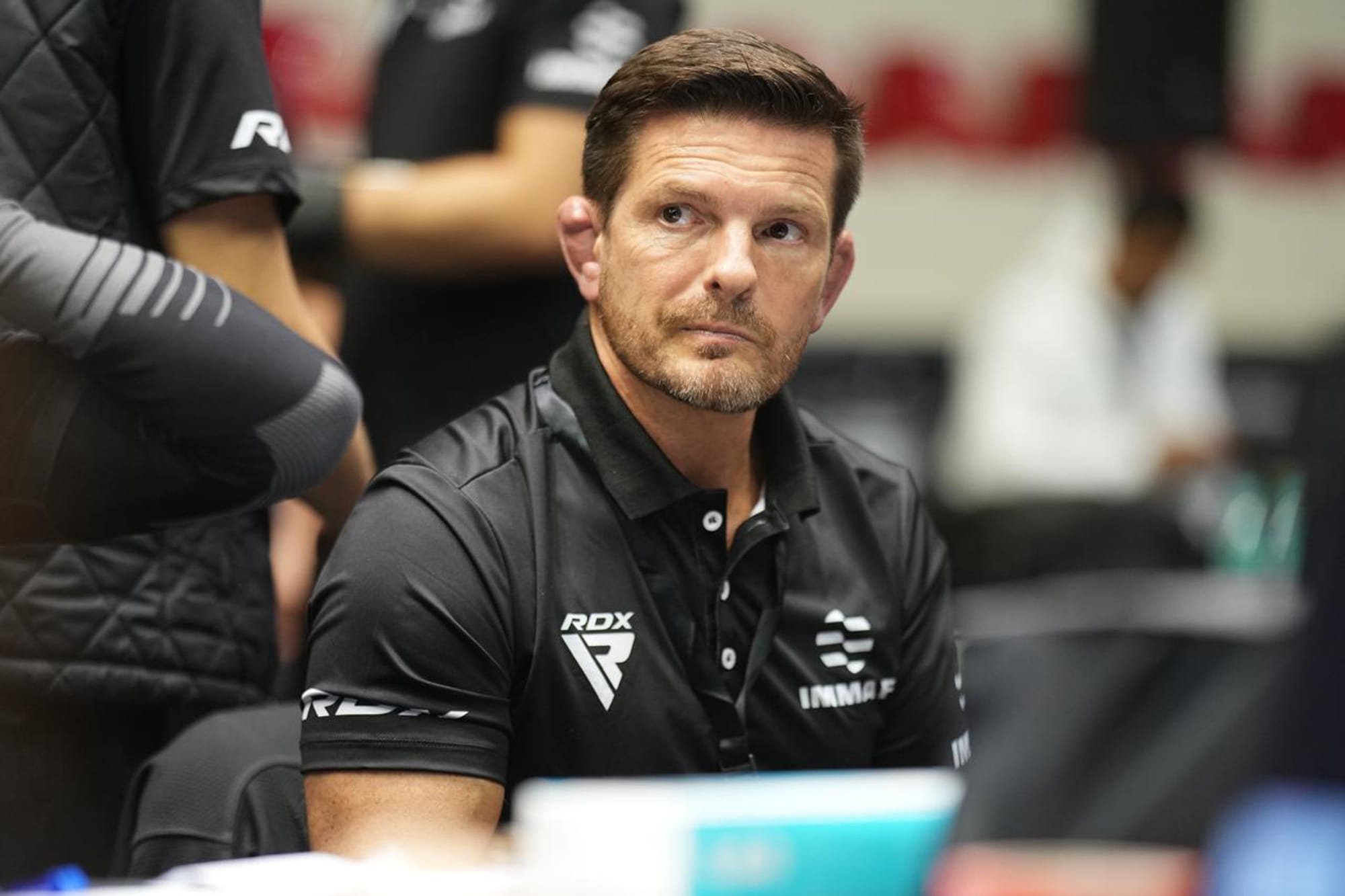
For Carlos Alberto Silva Nunes, officiating is rooted in a lifetime spent studying combat sports from every angle. A former competitive Olympic wrestler, coach, Brazilian Jiu-Jitsu brown belt and longstanding MMA official, he brings practical experience to a role defined by pressure, precision and responsibility.
His officiating journey began in 2008 with the Portuguese Federation of Amateur Combat Sports (FPLA-CAPMMA), where he started as a Level A MMA Referee and Judge. By that point, Nunes had already built decades of experience in wrestling, having begun competing in freestyle and Greco-Roman disciplines in 1982.
He won multiple national titles before moving into coaching, where he was named Coach of the Year in 2004 and worked as a National Grappling Coach. That background gave him a detailed understanding of the demands placed on athletes and the importance of informed decision-making inside the cage.
For Nunes, officiating was a natural next step. It offered a way to use his experience to help regulate competition and ensure that MMA is conducted to the highest possible standard.
Learning Beyond the Rulebook
Nunes believes that formal education is essential, but that world-class officiating is developed through sustained practical experience and direct mentorship.
His work at major IMMAF events, including World Championships in Belgrade, Albania and Tashkent, as well as Youth World Championships in Abu Dhabi and Dubai, has given him first-hand exposure to the demands of international competition. He has also worked at IMMAF African Championships in Angola and European Championships in Belgrade, experiences that have reinforced the value of consistent education across regions.
Mentorship has been central to that development. Nunes highlights the importance of learning from experienced international officials, particularly in the areas that cannot be fully captured in a rulebook: managing pressure, reading subtle changes in grappling and striking exchanges, and making split-second decisions that protect athletes.
Dr Andrew Moshanov’s guidance has played an important part in this process. Through access to senior officials and high-level events, Nunes has been able to develop the judgement required to move confidently between national and international competition.
“The most important factor is continuous, high-volume practical experience combined with objective, elite-level post-fight feedback,” Nunes says.
Consistency Builds Confidence
For Nunes, consistency is the foundation of athlete safety and sporting integrity. When officials apply the rules uniformly, athletes and coaches understand the boundaries of competition and can prepare accordingly.
This is especially important in a sport as complex as MMA, where striking, wrestling and grappling can create rapidly changing situations. Clear officiating helps reduce dangerous fouls, supports timely interventions and ensures that effective action is recognised properly by judges.
Inconsistent decisions, by contrast, can create uncertainty for athletes and undermine confidence among coaches, spectators and regulatory bodies. Nunes believes that predictable standards are essential if MMA is to continue strengthening its standing as a globally recognised sport.
His vision of an international officiating standard is clear: the same scoring criteria and safety interventions should apply regardless of the level or location of competition. Whether an official is working at an IMMAF amateur event or a major professional promotion, athletes should encounter the same clarity, fairness and protection.
Education Without Borders
Technology has an important role to play in making this standard achievable. Nunes sees online education as a way to make high-level development more accessible, particularly for officials in developing regions.
Centralised platforms can give referees and judges across all continents access to shared video archives, complex fight sequences and standardised scoring exercises. This creates a common foundation for rule interpretation, helping officials in Europe, Africa, Pan America and beyond develop through the same educational materials.
Technology cannot replace live experience, but it can ensure that officials arrive at events with stronger preparation and a clearer understanding of what is expected of them.
Nunes also sees the new continental structure as an opportunity to strengthen progression within the officiating pathway. Regional systems can support regular seminars, share resources and identify promising officials earlier, creating a stronger bridge between national events and global competition.
For Carlos Alberto Silva Nunes, the aim is not simply to develop more officials. It is to develop officials who understand the sport deeply, apply its rules consistently and protect athletes with the confidence that comes from genuine experience.