Hasan Khan
On 20 March 2017, Argentina took its first official step toward structured mixed martial arts with the founding of the Argentine Association of Mixed Martial Arts and Contact Sports. This initiative emerged from a grassroots coalition of coaches, athletes and their families, united by a shared passion and vision: to establish MMA on firm organisational foundations, offering governance, education and competition pathways across the country.
In its early phase, the fledgling federation had to navigate Argentina’s strict sports regulatory environment, an unfamiliar territory that represented a steep learning curve. However, by engaging with authorities and demonstrating professionalism, it soon gained vital institutional backing. A breakthrough came in 2018, catalysed by support from Diógenes de Urquiza, then Secretary of Sports, and Rubén Delio, the Technical Director at CeNARD (the country’s National Centre for High-Performance Sport). Their endorsement allowed the federation not only to be registered, but to be integrated into CeNARD’s training programmes, an early sign of MMA’s legitimacy within Argentina’s broader sporting architecture.
That validation meant MMA could be practiced by federated athletes under the same rigorous standards that apply to Olympic disciplines. By 2019, the federation had initiated Argentina’s first national Martial Arts Circuit, staging three events that autumn and providing athletes across the country with new competitive opportunities. Soon, more clubs and coaches engaged in small local tournaments reflecting a growing commitment to structure and safety.
Though the pandemic in 2020-2021 disrupted sports worldwide, Argentina’s MMA federation adapted strategically. Rather than stall, it increased event frequency, holding more than five national competitions by the end of 2021, averaging one carefully regulated tournament per month. This growth demonstrated both organisational resilience and the public’s appetite for MMA under ethical, transparent oversight.
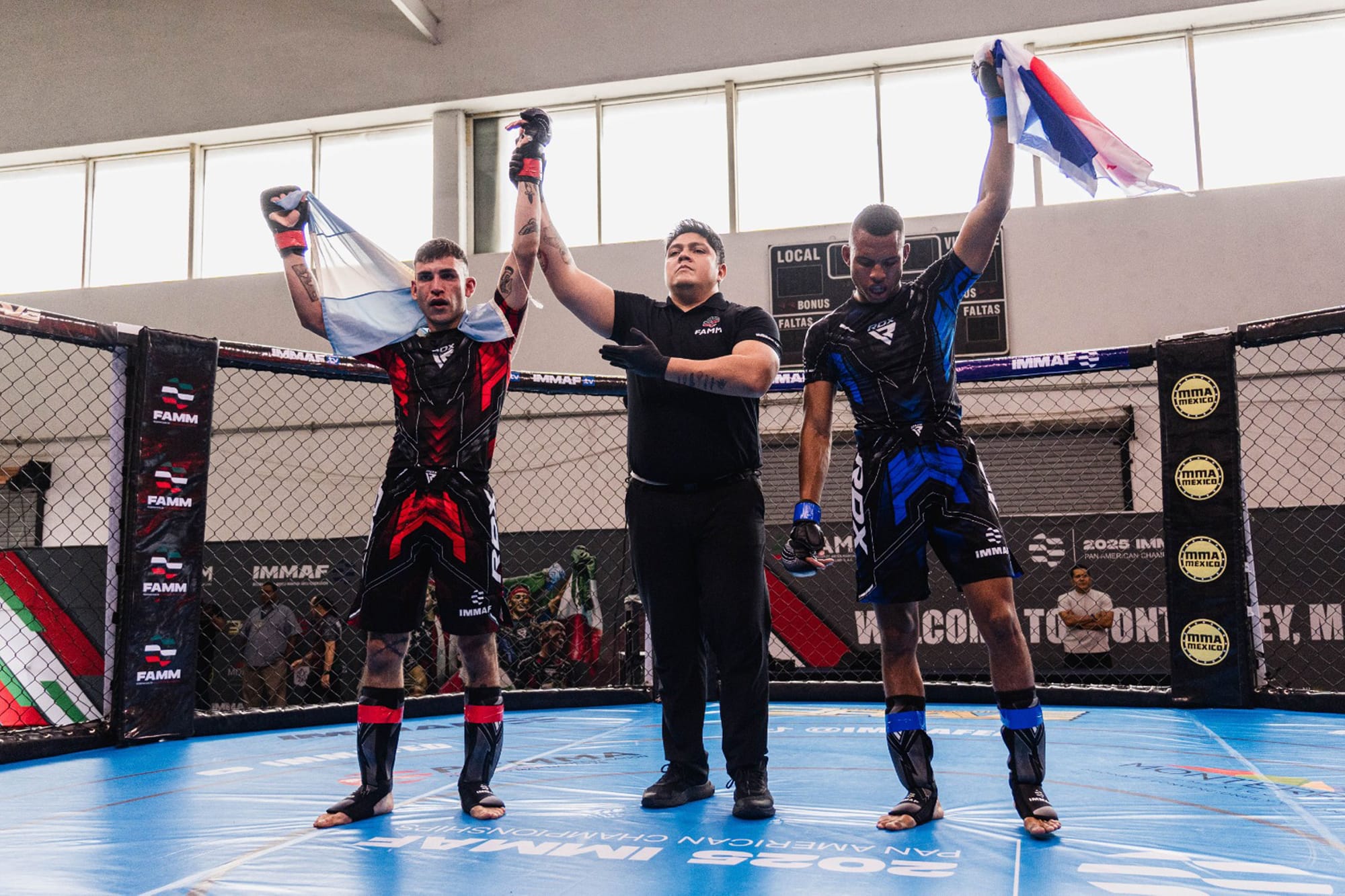
A cornerstone of this progress has been the federation’s early and active affiliation with IMMAF. Officially listed among IMMAF’s recognised members, Argentina has stayed aligned with the international body on everything from competition governance and safety protocols to coach and referee education. This connection has given Argentine MMA both credibility and access to continental and global competition.
A defining moment came in 2023, when MMA debuted as a demonstration sport at the Pan American Games in Colombia. Argentine fighters capitalised on the spotlight, earning two bronze medals and marking the federation’s first medalled performance in a major multi-sport event. This success was not just a competitive milestone, it signified recognition of MMA as a legitimate, high-performance sport .
Building upon this achievement, in 2025 the federation partnered with Uruguay’s AUAMMAP to stage its first binational national team tournament in Montevideo. The event was also notable for being Argentina’s inaugural IMMAF level grading exam, held onsite and overseen by Uruguayan MMA President Darío Gutiérrez, Coach Santiago Gallo, world champion Jimena Osorio and officiating director Pablo Tessore. This cross border educational collaboration demonstrated the federation’s commitment to embedding international standards directly into Argentina’s national system.
Domestically, the federation has been methodical in strengthening MMA’s national structure. Founders identified six key priorities: establishing firm rules and standards, expanding club participation, promoting ethics and transparency, implementing training programmes, integrating IMMAF oversight, and increasing female and youth engagement. To these ends, continuous education programmes for coaches, referees and event promoters have been put in place. Focused recruitment campaigns, safety assurances and parental outreach have accelerated female participation, mirroring global trends in amateur MMA.
Through ongoing collaboration with educational institutions and community sports organisations, the federation has highlighted the safety-first approach of regulated MMA, including the use of headgear, mouthguards and medical supervision. For minors, formal parental consent is required. These measures have helped build public and parental trust, which is essential to the federation’s continued growth.
The federation is now seeking formal recognition from the Argentine Olympic Committee, a strategic next step toward establishing MMA as an Olympic discipline within Argentina. This would represent the culmination of a long process of state level legitimisation and integration, echoing similar ambitions held by amateur MMA bodies worldwide.
Today, eight years after its founding, Argentina’s MMA federation stands as a fully functioning national body, rooted in governance, driven by education and recognised through competition. Its transformation from local grassroots group to continental presence has been marked by institutional breakthroughs at CeNARD, medal winning performances in Santiago and regional cooperation in Montevideo. Above all, it is defined by its embrace of IMMAF’s global structure, rooted in safe, ethical, athlete centred development .
Argentina’s MMA journey shows that even in non-traditional combat sports, disciplined structure, transparent governance and international integration can drive rapid and sustainable success. As it continues to grow, Argentina’s amateur MMA federation is built for both competitive and structural excellence, placing it firmly on the path toward global sporting relevance.