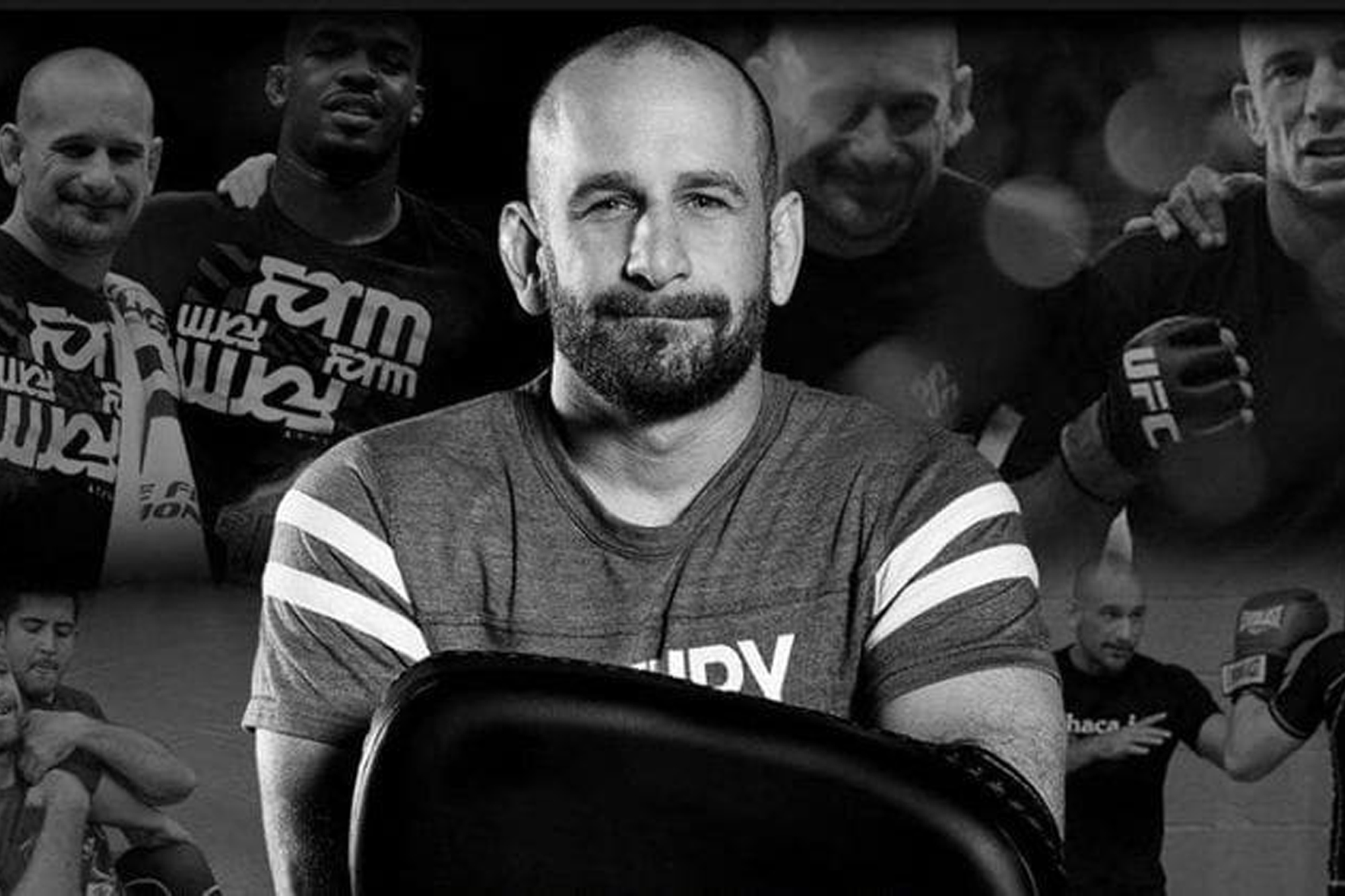
Hasan Khan
Greg Jackson is one of the most influential figures in modern MMA. Co-founder of Jackson Wink MMA Academy and a multi-time Coach of the Year, he has shaped the careers of several world champions while continuously redefining what it means to coach. Today, his focus is broader than ever. As part of the United States’ national amateur coaching team, Jackson is committed to building the next generation of athletes through structure, education and resilience.
Jackson was raised in Albuquerque, New Mexico, in a household rooted in discipline and nonviolence. Though he describes his upbringing as pacifist, he was drawn early to self-defence training, which laid the groundwork for his future in coaching. Over time, he developed Gaidojutsu, an ever evolving hybrid system that strategically blends elements of wrestling, striking and submission grappling.
By the late 1990s, Jackson had transitioned from practitioner to coach. What started as local experimentation turned into a world-class operation. When the UFC rose to prominence, Jackson’s athletes began competing at the highest levels. In 2007, he partnered with striking coach Mike Winkeljohn, forming Jackson Wink MMA Academy. Based in Albuquerque, the gym quickly became a powerhouse. Under Jackson’s guidance, fighters such as Jon Jones, Georges St-Pierre, Holly Holm and Rashad Evans reached championship status.
Despite his success at the elite level, Jackson’s coaching philosophy has never focused solely on titles. He is deeply interested in the underlying systems that produce excellence over time.
“I was basically talked into it,” he said, recalling how his early training groups began competing. “I figured we do one and be done. Then we started winning and that kept us in the game.”
Jackson is particularly drawn to the strategic side of MMA, viewing the sport as a constantly evolving puzzle that demands critical thinking, adaptability and long-term planning. His coaching style reflects this philosophy. Rather than relying on rigid formulas, he has built his career on continuous development, encouraging both athletes and coaches to innovate rather than imitate.
In his role with the U.S. national amateur MMA team, Jackson is applying that same mindset to an area he considers vital for the future of the sport. He believes the amateur tier must serve as more than a stepping stone, functioning instead as a proving ground for technical growth and mental strength. In his view, a strong amateur structure provides athletes the space to learn, make mistakes safely and arrive at the professional level with a foundation built on discipline and preparation. The pathway he describes reflects the framework championed by IMMAF, which provides regulated competition and international opportunities for athletes to develop safely.
Jackson emphasises that confidence comes directly from skills, and athletes who refine their abilities in the amateur ranks are far more likely to succeed when they reach the highest stages of competition. He also sees the amateur system as a way to prepare athletes for careers beyond the cage. With MMA now recognised as a global industry, he argues that education for post-competition life must become part of the pathway. Success is measured not only by competitive results but also by the holistic development of athletes as capable individuals.
At the core of Jackson’s philosophy is a deep respect for the human development that martial arts provides. He draws inspiration from traditional models, like the one established by Jigoro Kano in Japan, who popularised judo as a discipline that shaped character as much as athletic performance.
“It wasn’t just about sport or martial art. It was about character development,” Jackson shared. “We need to avoid losing sight of this in the rush for competitive success.”
Jackson places particular emphasis on resilience, which he sees as increasingly at risk in today’s performance driven culture. He recognises that younger generations are more willing to address mental health openly, which he views as a positive shift, but he also cautions that constant focus on wellbeing can sometimes come at the expense of grit. For him, resilience is not innate but developed through experience. It is built by confronting adversity and returning consistently to training despite setbacks. The routine of martial arts; managing injuries, working through fatigue and learning to recover quickly, provides an environment where athletes discover that challenges such as pain or discomfort are simply part of the process rather than obstacles to progress. This philosophy is mirrored in IMMAF’s approach to amateur competition, where athletes are tested in controlled but demanding environments that build both skill and resilience.
With decades of experience, Jackson understands the long game. He recognises that sustainable success in MMA depends on more than highlight reels or fight-night results. It requires educational infrastructure, strong club systems and opportunities for athletes to grow both physically and mentally.
As a national team coach, Jackson is contributing far beyond his famous gym in Albuquerque. His focus is now national, not just local. He brings with him a blueprint for how to build champions and how to guide young athletes through the emotional and technical challenges of the sport. As American athletes progress, IMMAF’s international platform ensures that their growth can be measured against global standards, an outlook that aligns closely with Jackson’s long-term vision.
With strategy, discipline and education at the core of his philosophy, Jackson is preparing athletes to succeed in competition and ensuring that American MMA continues to grow with purpose.